Friday, April 26, 2013

Challis Chalet: The Simplicity 1880 Shirtwaist


You know, I'm sure there's an awful lot about this dress I could say, but I really don't feel like doing a process post tonight.  This is Simplicity 1880, one of the project runway ones. I can see why they are so popular now, as they are extremely well drafted. Suffice it to say that this is my wearable muslin. For the first time ever I went ahead and didn't make a muslin first. I pretty much have these kind of bodices figured out and I was pretty darn confident that I didn't need to test it. I think my next two makes are going to have cap sleeves though.

Oh, before we go on, don't forget to vote for the Sewcialist emblem!


This was an accidental photo of me walking back to pose. I liked it so here it is.


I'm not sure what I'm doing here but, hey, its a good shot of my backside. Mostly.


Check out that fantastic collar.  This was, I think, the moment where doing a notched collar finally sank in and made sense in my brain. Now if only I could wrap my head around pants geometry, the world would be a better place.


Pretty flared skirt. I wish I could show you how the fabric sort of sparkles and a close up makes it look like peacock feathers and ferns. My belt is vintage, probably 80's, from Nashville when I went to see the Golden Age of Couture exhibit and met Gertie in person.


I might look like my paternal grandmother in this photo.


That's all folks. I have two more of theses dresses planned, they are all meant to be work appropriate. I'll do a post on what modifications I made and a bit about getting the invisible side zip to be, well, invisible.

As for photos, I think for now on i'm going to take them in the morning when I'm backlit, or maybe another how for the sun to be down further. We'll see.

Cheers!

Wednesday, April 24, 2013

Voting Begins for Sewcialists!


Welcome Everyone! We're here today to vote on the 6 Sewcialists emblem entries. Please consider the following before you cast your vote:

We asked each designer to design an emblem that...

  • Relates to sewing and the social nature of sewcialists
  • Is modern, simple, recognizable and memorable
  • Is useable in black & white as well as in color

 You can read the rest of the requirements on the Sewcialists.org site. On this site, you can also find the rest of the Jury Blogs. You are allowed one vote per jury blog. The Jury itself will not be voting. The jury eliminated the short-list portion of this contest. The designs up for vote are the designs that were submitted.

   When you vote on our blogs, please make your vote very clear, typing in the # of the entry and the designer's name.
   Included before each design is a portion of the designer's cover letter to give you context.

**Special Technical Note** For those emblems that appear with a brown background, that is because they were made on a "clear" template, which is to say, they will show through whatever is the background color on your blog. In my case, its brown. I have unfortunately not figured out how to get blogger to not do that on specific images.


Voting closes on May 8th at midnight Eastern time in the United States.


Entry #1- Bev

I chose my designs as a globe representing the world wide sewing community, needle and threads to represent sewing, threads of different colours to represent our differences and a computer mouse to represent our mode of communication.


Entry #2- Gareth


I think that this design shows the close-knit (excuse the pun) nature of Sewcialists.  It places them within the circle created by the threads coming from the needles. I think this nicely sums up the idea of a community brought together by the hobby that they love.


Entry #3- Sabina

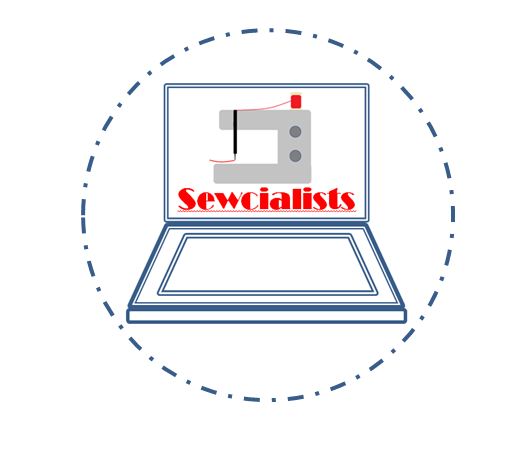
I basically wanted to keep the logo very simple and recognisable. Every sewcialist will at some point use a computer to communicate about their creations or engage with other sewcialists. Although there are lots of different hardware options to enable us to do this (smart phones, desk tops, tablets etc etc) I thought the world at large would be able to immediately recognise a standard laptop to represent how the online community interacts.The sewing machine in the middle was the obvious choice to represent what sewcialists do at the very heart of our creativity. It’s actually based on my Janome 525S machine! The dot and dash circle enclosing the logo represents to me the cutting lines on patterns!


Entry #4- Joost

The design uses a button and bobbin to relate to sewing whereas the smiley face speech balloon relates to the social nature of sewcialists.

The button is slightly rotated. It makes it visually more pleasing and reminds us that sewcialists needn't adhere to the stereotype of off-the-peg garments. The bobbin is half-filled with thread, indicating it's being used. The friendly chatter that sewcialists engage in online is embodied in the form of a speech balloon/smiley face.

The emblem is simple in its design and its button and bobbin shapes breathe 'sewing'. The combination of three basic elements makes it memorable, yet distinctive.

The black and white version at the bottom and the color version at the top prove that the logo 'works' regardless of colors.

But I don't like the color!

You don't have to. You may like the same dress pattern as another sewcialist, but that doesn't mean you should make it in the same color, right?

The strength of the design is its shape. Only you can choose your prefect colors. So, pick your own colors and make this design your very own sewcialist emblem.

You can do so online at this address:: http://lab.decock.org/sewcialists/


Entry #5- Dylan


Entry #6- Anne

My design is a patchwork globe revolving on an axis which is represented by the dress form. The needle and thread which changes to a computer mouse representing the lines of communication going round the globe linking sewing and the social media.

My idea for this came from the inclusive and diverse nature of the sewcialist community represented by the patchwork pieces of the countries - linked by a common thread - our sewing and means of communication. My favourite author is Anne Tyler who wrote the book A Patchwork Planet so a bit of me. I also wanted to represent all sewers, the dress form for the garment sewers among us and the patchwork, yes you've guessed it! for the patchwork community.

The text around the outside gives a vintage feel - I think - to the design. I mention the word Sewcialist  at the top and I felt we should aim high - with a bit of humour so a bit tongue in cheek with the proclamation that we will unite the world with our stitches.


Don't forget you can go to all the other jury blogs and vote for your favorite! Only one vote per blog, though, ok?


Thursday, April 18, 2013

The Little Black Work Dress

Its kinda windy out today.

Hey look, its another Vogue 8701! This one I made out of black rayon/wool gabardine from FabricMart. I made one modification from my previous plaid version, which was to take an extra dart at the neckline. I think I could honestly take this in a bit in the sides as gabardine has more give to it than silk dupioni. It has a wonderful drape and depth of color, though, which I love. And its perfect for a chilly office setting without being too hot when you have to drive home, except maybe during July and August.

I think I was giving the stray cat the stink eye, not sure.
 I just recently got this super cute bow hairband that I love to pieces. And this is a self made belt and vintage brooch.


This is me swishing from side to side. Like I said, its a great swishy fabric.


Here you kinda get a peek of the zipper. Its a vintage metal zipper I stole from my MIL stash and put in with a hand pick stitch.  And because of the way my waist is, the belt rides up above the dress waistline a bit.

Incidentally, it looks just fine un belted.

Side view. Side note: The shoes are Jeffrey Campbell. Two years and they are still my favorites.


So some stats:

Fabric: rayon/wool gabardine $5yd (bought during a super sale), 3 yards.  Bemberg rayon lining, I fussed with it and got it out of 2.5 yards (60" wide), $16 a yard. So $47 dollars.
Notions: Zipper and lace hem tape, both inherited from other people's stashes. 0 dollars
Time: If I hadn't put the sleeves in backwards, cut to finish would have been 8 hours (hand picked zipper, hand sewn invisible hem). But that added on an extra 2 hours. I started this last month and fussed with it off an on. 10 hours over about four weeks.

Sunday, April 7, 2013

Altruistic Chalet Sewing

My daughter, upon walking in the door from school Friday afternoon, informed me that she needs a new bathing suit. Spring break is this week and Grandma is taking her to the aquatic center. Luckily for me, I already have the perfect fabric and the lovely and talented Katie was kind enough to send me a couple swim suit patterns, even traced one off for me. Sewing buddies are the best ever. :) I only got one one photo of Felicity in the suit, felt odd to post it outside of an actual swimming scene, so I'll save that for May.

Swim suit cut out

I'm a bit new to the idea of elasticizing a leg hole and probably could have done it a bit better. Again, Felicity doesn't seem to care. I used a latex elastic that, again, was a gift from Katie.

Finished suit laid out on her bedspread
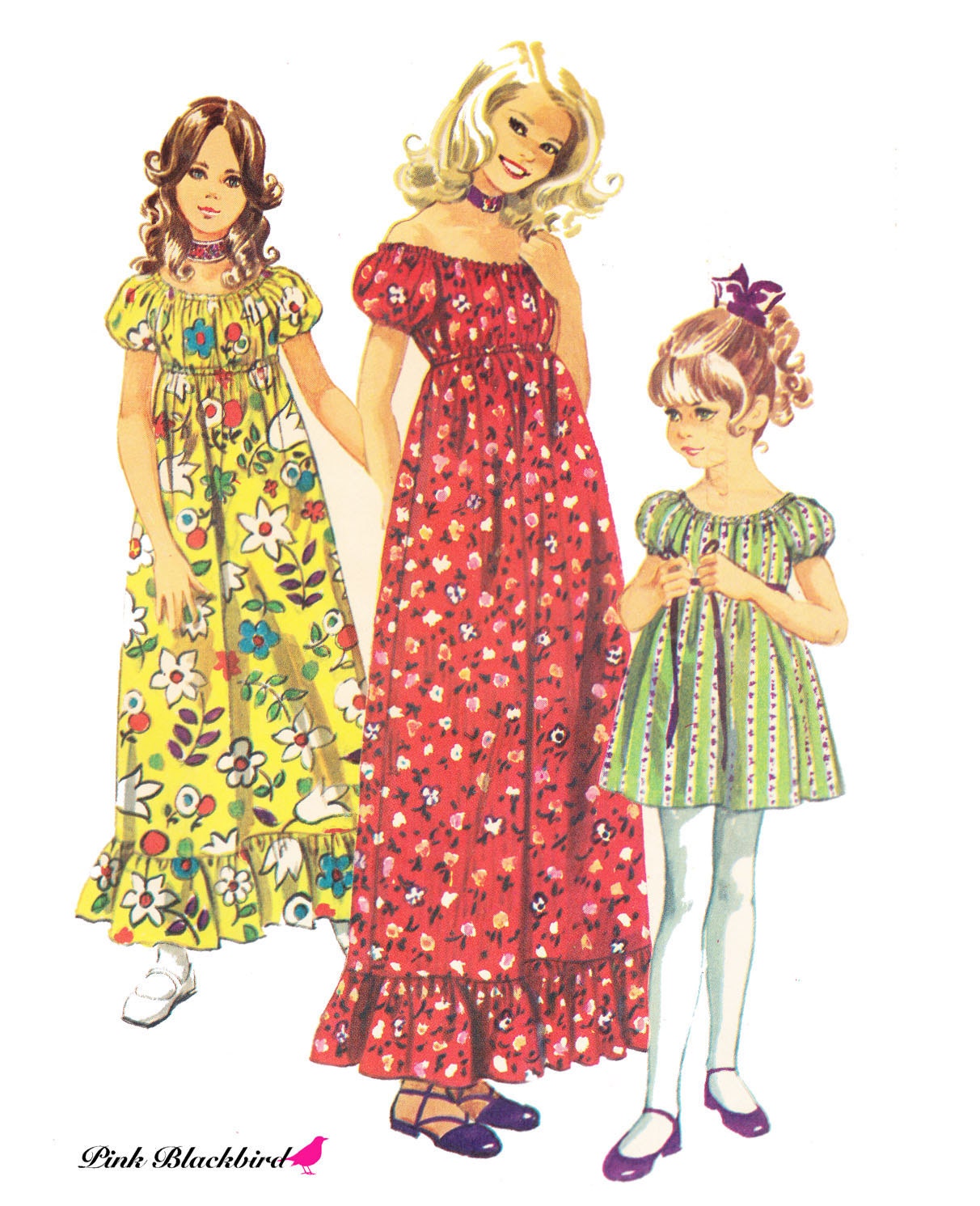
However, in the spirit of April Challis month, I decided to make dress from purple leopard print challis for my daughter. (Whom shall henceforth be known as "elf girl" because ,according to my husband, I spawn elves instead of humans after him seeing this last set of photos.) I used this 70's boho pattern.

Simplicity 9389

I didn't take any in-progress photos. It took probably about 2.5 hours in all to put this together. I used some single fold bias tape from Mom's stash to use as the elastic guide. The ruffle piece said to cut out three total, I did two on the fold instead, so she's got an extra ruffly ruffle.

challiself
Elf Girl 
In all, the materials (including pattern) for bathing suit and dress cost me about $12.50 plus about five hours of sewing time due to learning curve (see: elastic). I'm fairly sure my construction, while not the prettiest, is sturdy and should hold up under the rough conditions they are bound to be put through.

challisonlog
She shall attend to her flock.
Have I mentioned she loves ALL THINGS ANIMAL PRINT. Seriously, all the things.And she stole her brothers flip flops.

challisanviolets
And make flowers grow.

This is my backyard. My weeds already need mowing and I was just using the fireplace two days ago. 


challisandbroom
And capture Mona Lisa's smile.

How does a 9 year old look so ancient? I haven't figured this out yet. I left the elastic out of the sleeves because it seems more modern look and feel.I wanted to turn the hem under on the sleeve but she wanted to wear it RIGHT THEN, so well. I guess when I can pry it off of her for washing I'll fix that.

challisback
Full length of the back.

Well, that's all I have to share for now. I still have my black wool/rayon dress hanging waiting for a zipper and hem. That was part of the reason for these two, I just needed something quick. Simon asked for swim trunks, but I don't have anything suitable for him on hand.

Wednesday, April 3, 2013

Patterns That Play Well with Challis

Source

Settle in darlings, lets have some brunch (because I know we all slept in) and discuss what kind of patterns work with challis. The more flowing the better, though not all challis is created equally, as we read in the last post. Some of it is heavier and can take a bit more structure than others. Here are few of my pairings:


I have  several fabrics I want to make Simplicity 1880 in, AND Sunni did a great sew-a-long last year which you can read about here.


This is a one way fabric and I just LOVE the border flowers, which will be the bottom of the skirt. You probably recognize this as Colette's Chantilly. I've made this before, so I won't have quite as much work to do to get it to fit. Other pattern ideas:


Tasia's Cambie Pattern


Vogue 8827, for a great work dress, particularly version B.

Simplicity's Cynthia Rowley 1872

SO those are my picks! What have you decided on? Let me know in the comments!

Friday, March 29, 2013

Challis - A History of Our Chalet's Namesake


Hello Chalet guests, have a seat and lets talk a little bit about the history of our namesake, challis.

According to the dictionary is a lightweight plain-weave fabric of wool, cotton, etc., usually with a printed design. Which is all well and good, but doesn't really give us more information than that. So I figured I'd start with what a "lightweight plain weave" means.  Enter a text book from 1925*.

Click to embiggen.
"A plain weave" is where one weft yard passes evenly over one warp yard. This takes the least amount of material to make and is very inexpensive. The book goes on to say that challis is made from cotton and wool (rayon has not yet caught on).

Wool challis is light and soft and recommended for dresses and negligees. It will cost you (adjusted for inflation) anywhere from $13-25 dollars per yard (no wider than 39").


Cotton challis, however, is considered for inexpensive dresses and "comfortables" (lounge wear, I'm assuming).  This will run you anywhere from $2.50 to $24 a yard (also, no wider than 39").  

Now lets fast forward about 15 years, just before WWII was really under way. Chemists had been working on improving rayon, or "viscose" as it were to make it easier and more cost effective to manufacture. Somewhere around the 20's it started being called "artificial silk" and, as I looked, was not yet more than a foot note in text books but popular among households, until the 30's and the Great Depression.  But here's info according to DuPont's timeline.

About the time of the 1940's, DuPont started pushing rayon through what I can only assume are the original "infomercials".  I found an example from 1940 itself.


But rayon, and coincidentally, rayon challis, didn't catch on until the USA was fully embroiled in  WWII and rationing started.

After this country entered World War II practically no staple clothing fabrics of prewar quality were manufactured for the civilian. Some of the materials that homemakers used during peacetime in enormous quantities to clothe their families virtually disappeared from the civilian
consumer's market. No 80-square percale, no fine-count two-ply broadcloth or voile, and little gingham, chambray, muslin, nainsook, lawn, or poplin was available. These shortages were due in part to Government regulations which directed enormous quantities of textile goods to the armed forces. In order to stretch as far as possible the small amounts of fiber available, there was also a lowering of quality of textile materials made for home folks.
By the spring of 1944 the supply and variety of serviceable cotton fabrics were limited. The prewar backlog of materials of good quality was used up and the flow of these fabrics from the factories to the stores had almost ceased. In the small cities and towns, particularly those near military bases or camps, the shortage of staple materials was acute. Many of the few fabrics available, particularly the cottons, were so unattractive in design and color that they obviously would not have sold readily, if at all, in normal times. Rayons were generally more plentiful and more comparable to prewar fabrics than were the cottons, but some types of rayons were scarce. Wool and wool mixed fabrics were more plentiful than the cottons. Mixtures of wool and rayon were common, but few wool and cotton mixtures were on the market.
From early in 1944 until several months after the end of hostilities, homemakers in various parts of the United States found many of the available staple clothing fabrics so coarse and sleazy that they scarcely justified the money spent for 'hem or the time and energy used to make th jloth into garments. Many of the fabrics shrank and were faded by light and washing.

The relatively large volume of "too poor" fabrics might have been replaced by a smaller volume of materials of better quality if minimum quality standards had been set up for textile goods. Such standards under Government control would have prevented textile raw materials from being manufactured into inferior fabrics in this period of scarcity.
Before World War II considerable progress had been made in determining the physical characteristics of cotton woven goods such as broadcloth, chambray, gingham, and percale (5, 6,16,17).2
Federal specifications developed for the use of Government agencies in purchasing these goods have been in existence for several years (11, 12,13, 14). In these specifications for broadcloth and chambray differences in quality have been
designated. On the other hand, the quality of other classes of cotton and of various types of wool and rayon fabrics is not so generally known. The quality of various kinds of mixed fabrics composed of cotton, rayon, wool, and other fibers needs to be studied since they are becoming more and more common. Some of these fabrics are included in this study. Found here in Google Books, Quality of Fabrics Study in 1946
So, in essence, rayon and particularly challis, became popular because what else was there to use? Here are some vintage samples.


Source: etsy.com viaLady on Pinterest


Source: etsy.com viaLady on Pinterest


Source: etsy.com viaLady on Pinterest


Well, that concludes today's lesson. I hope you enjoyed it and learned something new!